Proper hypercovering

Consider the topology τ on the category of schemes where a covering is a finite family of proper morphisms which are jointly surjective. (Dear reader: does this topology have a name?) For the purpose of this post proper hypercoverings will be τ-hypercoverings as defined in the chapter on hypercoverings. Proper hypercoverings are discussed specifically in Brian Conrad’s write up. In this post I wanted to explain an example which I was recently discussing with Bhargav on email. I’d love to hear about other “explicit” examples that you know about; please leave a comment.

The example is an example of proper hypercovering for curves. Namely, consider a separable degree 2 map X —> Y of projective nonsingular curves over an algebraically closed field and let y be a ramification point. The simplicial scheme X_* with X_i = normalization of (i + 1)st fibre product of X over Y is NOT a proper hypercovering of Y. Namely, consider the fibre above y (recall that the base change of a proper hypercovering is a proper hypercovering). Then we see that X_0 has one point above y, X_1 has 2 points above y, and X_2 has 4 points above y. But if X_2 is supposed to surject onto the degree 2 part of cosk_1(X_1 => X_0) then the fibre of X_2 over y has to have at least 8 points!!!!

Namely cosk_1(S —> *) where S is a set and * is a singleton set is the simplicial set with S^3 in degree 2, S^6 in degree 3, etc because an n-simplex should exist for any collection of (n + 1 choose 2) 1-simplices since each of the 1-simplices bounds the unique 0-simplex on both sides, see for example Remark 0189. So I think that to construct the proper hypercovering we have to throw in some extra points in simplicial degree 2 which sort of glue the two components of X_1.

Now, as X_* does work over the complement of the ramification locus in Y, I think you can argue that it really does suffice to add finite sets of points to X_* (over ramification points) to get a proper hypercovering!

PS: Proper hypercoverings are interesting since they can be used to express the cohomology of a (singular) variety in terms of cohomologies of smooth varieties. But that’s for another post.

ZMT

Theorem. Let f : X —> Y be a proper morphism of varieties and let y ∈ Y with f^{-1}(y) finite. Then there exists a neighborhood V of y in Y such that f^{-1}(V) —> V is finite.

If X is quasi-projective, then there is a simple proof: Choose an affine open U of X containing f^{-1}(y); this uses X quasi-projective. Using properness of f, find an affine open V ⊂ Y such that f^{-1}V ⊂ U. Then f^{-1}V = V x_Y U is affine as Y is separated. Hence f^{-1}V —> V is a proper morphism of affines varieties. Such a morphism is finite, see Lemma Tag 01WM for an elementary argument.

I do not know a truly simple proof for the general case. (Ravi explained a proof to me that avoids most cohomological machinery, but unfortunately I forgot what the exact method was; it may even be one of the arguments I list below.) Here are some different approaches.

(A) One can give a proof using cohomology and the theorem on formal functions, see Lemma Tag 020H.

Let ZMT be Grothendieck’s algebraic version of Zariski’s main theorem, see Theorem Tag 00Q9.

(B) One can prove the result using ZMT and etale localization. Namely, one proves that given any finite type morphism X —> Y with finite fibre over y, there is after etale localization on Y, a decomposition X = U ∐ W with U finite over Y and the fibre W_y empty (see Section Tag 04HF). In the proper case it follows that W is empty after shrinking Y. Finally, etale descent of the property “being finite” finishes the argument. This method proves a general version of the result, see Lemma Tag 02LS.

(C) A mixture of the above two arguments using ZMT and a characterization of affines:

  1. Show that after replacing Y by a neighborhood of y we may assume that all fibers of f are finite. This requires showing that dimensions of fibres go up under specialization. You can prove this using generic flatness and the dimension formula (as in Eisenbud for example) or using ZMT.
  2. Let X’ —> Y be the normalization of Y in the function field of X. Then X’ —> Y is finite and X’ and X are birational over Y. Finiteness of X’ over Y requires finiteness of integral closure of finite type domains over fields, which follows from Noether normalization + epsilon.
  3. Let W ⊂ X x_Y X’ be the closure of the graph of the birational rational map from X to X’. Then W —> X is finite and birational and W —> X’ is proper with finite fibres and birational.
  4. Using ZMT one shows that W —> X’ is an isomorphism. Namely, a corollary of ZMT is that separated quasi-finite birational morphisms towards normal varieties are open immersions.
  5. Now we have X’ —> X —> Y with the first arrow finite birational and the composition finite too. After shrinking Y we may assume Y and X’ are affine. If X is affine, then we win as O(X) would be a subalgebra ofa finite O(Y)-algebra.
  6. Show that X is affine because it is the target of a finite surjective morphism from an affine. Usually one proves this using cohomology. The Noetherian case is Lemma Tag 01YQ (this uses less of the cohomological machinery but still uses the devissage of coherent modules on Noetherian schemes). In fact, the target of a surjective integral morphism from an affine is affine, see Lemma Tag 05YU.

Cocontinuous functors

This post is another attempt to explain how incredibly useful the notion of a cocontinuous functor of sites really is. I already tried once here.

Let u : C —> D be a functor between sites. We say u is cocontinuous if for every object U of C and every covering {V_j —> u(U)} in D there exists a covering {U_i —> U} in C such that {u(U_i) —> U} refines {V_j —> u(U)}. This is the direct translation of SGA 4, II, Defintion 2.1 into the language of sites as used in the stacks project and in Artin’s notes on Grothendieck topologies. Note that we do not require that u transforms coverings into coverings, i.e., we do not assume u is continuous. Often the condition of cocontinuity is trivial to check.

Lemma Tag 00XO A cocontinuous functor defines a morphism of topoi g : Sh(C) —> Sh(D) such that g^{-1}G is the sheaf associated to U |—> G(u(U)).

The reader should contrast this with the “default” which is morphisms of topoi associated to continuous functors (where one has to check the exactness of the pull back functor explicitly in each case!). Let’s discuss some examples where the lemma applies.

The standard example is the functor Sch/X —> Sch/Y associated to a morphism of schemes X —> Y for any of the topologies Zariski, etale, smooth, syntomic, fppf. This defines functoriality for the big topoi. This also works to give functoriality for big topoi of algebraic spaces and algebraic stacks. In exactly the same way we get functoriality of the big crystalline topoi.

Another example is any functor u : C —> D between categories endowed with the chaotic topology, i.e., such that sheaves = presheaves. Then u is cocontinuous and we get a morphism of topoi Sh(C) —> Sh(D).

Finally, an important example is localization. Let C be a site and let K be a sheaf of sets. Let C/K be the category of pairs (U, s) where U is an object of C and s ∈ K(U). Endow C/K with the induced topology, i.e., such that {(U_i, s_i) —> (U, s)} is a covering in C/K if and only if {U_i —> U} is a covering in C. Then C/K —> C is cocontinuous (and continuous too) and we obtain a morphism of topoi Sh(C/K) —> Sh(C) whose pullback functor is restriction.

What I am absolutely not saying is that the lemma above is a “great” result. What I am saying is that, in algebraic geometry, the lemma is easy to use (no additional conditions to check) and situations where it applies come up frequently and naturally.

PS: Warning: In some references a cocontinuous functor is a functor between categories (not sites) is defined as a functor that commutes with colimits. This is a different notion. Too bad!

Update

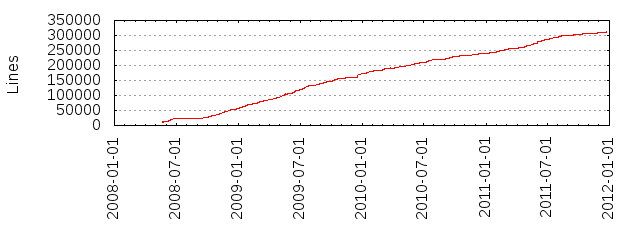
Since the last update we have added a new chapter. This chapter explains the Popescu-Ogoma-Andre-Swan proof of general Neron desingularization (GND). As explained here there is a way to reduce to the case of a base field. This does simplify the rest of the arguments somewhat, but not as much as I’d have liked.

The heart of the proof of GND is in the proof of Lemma Tag 07FJ. For some reason working through this proof made me think of playing chess, in that you have to think ahead several moves and the steps you take early in the proof almost don’t seem to make sense. I have a hard time explaining it, even to myself. But then, I was never any good at chess.

Update

Since the last updateon October 12 we have added the following material

  1. Gabber’s argument that categories of quasi-coherent modules form a Grothendieck abelian category (for schemes, spaces, and algebraic stacks),
  2. an example of an fpqc space which is not an algebraic space,
  3. an example of a quasi-compact non-quasi-separated morphism of schemes such that pushforward does not preserve quasi-coherency,
  4. some material related to my course on commutative algebra: exercise, lemmas, shorten proof of ZMT, etc
  5. introduced lisse-etale (and flat-fppf) sites,
  6. functoriality of lisse-etale topos for smooth morphisms (and flat-fppf for flat morphisms),
  7. material on Grothendieck abelian categories, incuding existence of injectives and existence of enough K-injective complexes (following Spaltenstein and Serp\’e),
  8. cohomology of unbounded complexes and adjointness of Lf^* and Rf_*,
  9. a lot of material on D_{QCoh}(X) for an algebraic stack X, including Rf_* (on bounded below for quasi-compact and quasi-separated morphisms) and Lf^* (unbounded for general f).

In particular my suggestion in this post worked out exactly as advertised. The existence of Rf_* is straightforward. It turns out that once you prove that the category D_{QCoh}(X) as defined in the blog post is equivalent to the version of D_{QCoh}(X) in L-MB or Martin Olsson’s paper (i.e. defined using the lisse-etale site), then you immediately obtain the existence of Lf^*. Namely, the existence of the lisse-etale site is used to prove that the Verdier quotient used to define D_{QCoh}(X) is a Bousfield colocalization (technically it is easier to use the flat-fppf site to do this, because we use the fppf topology as our default topology, but one can use either).

A bit of care is needed when working with the lisse-etale site and the lisse-etale topos. As discussed elsewhere, one reason is that the lisse-etale topos isn’t functorial for morphisms of algebraic stacks. Here is a another. There is a comparison morphism of topoi

g : Sh(X_{lisse,etale}) —-> Sh(X_{etale})

The functor g^{-1} has a left adjoint denoted g_! (on sheaves of sets) and we have g^{-1}g_! = g^{-1}g_* = id. This means that Sh(X_{lisse,etale}) is an essential subtopos of Sh(X_{etale}), see SGA 4, IV, 7.6 and 9.1.1. Let K be a sheaf of sets on X_{lisse,etale}. Let I be an injective abelian sheaf on X_{etale}. Question: H^p(K, g^{-1}I) = 0? In other words, is the pullback by g of an injective abelian sheaf limp? If true this would be a convenient way to compare cohomology of sheaves on X_{etale} with cohomology of sheaves on the lisse-etale site. Unfortunately, we think this isn’t true (Bhargav made what is likely a counter example — but we haven’t fully written out all the details).

Rf_* not preserving quasi-coherence

Here is a simple example that shows that in order to obtain a derived functor Rf_* on unbounded complexes with quasi-coherent cohomology sheaves we need some additional hypothesis beyond just requiring f to be quasi-compact and quasi-separated.

Let k be a field of characteristic p > 0. Let G = Z/pZ be the cyclic group of order p. Set S = Spec(k[x]) and let X = [S/G] be the stacky quotient where G acts trivially on S. Consider the morphism f : X —> S. Then Rf_*O_X is a complex with cohomology sheaves isomorphic to O_S for all p >= 0. In fact Rf_*O_X is quasi-isomorphic to ⊕ O_S[-n] where n runs over nonnegative integers.

Now consider the complex K = ⊕ O_X[m] where m runs over the nonnegative integers. This is an object of D_{QCoh}(X) but it isn’t bounded below. So we have to pay attention if we want to compute Rf_*K. Namely, in D(O_X) the complex K is also K = ∏ O_X[m]. Since cohomology commutes with products, we see that

Rf_*K = ∏ Rf_*O_X[m] = ∏ (⊕ O_S[m – n]).

In degree 0 we get an infinite product of copies of O_S which isn’t quasi-coherent.

Conclusion: Rf_* does not map D_{QCoh}(X) into D_{QCoh}(S).

Of course if f is a quasi-compact and quasi-separated morphism between algebraic spaces, then this kind of thing doesn’t happen.

1.11(b)

In Groupes de Brauer II, Remark 1.11(b) Grothendieck notes that results of Mumford’s paper “The topology of normal singularities of an algebraic surface and a criterion for simplicity” gives one an example of a normal surface Y over the complex numbers such that H^2(Y, G_m) isn’t torsion and does not inject into H^2(C(Y), G_m). Grothendieck even references a page number, namely 16. To explain this in the graduate student seminar on Brauer groups this semester I came up with the following, which may be what Grothendieck had in mind.

Let E ⊂ P^2 be a smooth degree 3 curve. Let P ∈ E be a flex point. Blow up P exactly 10 times on E, i.e., blow up P in P^2, then blow up P on the strict transform of E, etc. The result is a surface X with an embedding E ⊂ X such that

  1. the self square of E in X is -P, and
  2. the image of the map Pic(X) —> Pic(E) is contained in ZP.

This means you can blow down E on X to get a normal projective surface Y with a unique singular point y. Part 2 implies that the local ring of O_{Y, y} is factorial (this is one of Grothendieck’s claims — in fact we won’t need it). Now look at the Leray Spectral Sequence for G_m and the morphism f : X —> Y. You get something like

Pic(X) —> H^0(Y, R^1f_*G_m) —> H^2(Y, G_m) —> H^2(X, G_m)

We have R^1f_*G_m = Pic(E) placed at y and H^2(X, G_m) = 0 as X is a smooth projective rational surface. Using 1 and 2 above we conclude that H^2(Y, G_m) = E as abelian groups. By Gabber’s result on Brauer groups of quasi-projective schemes it follows that Br(Y) = E_{tors}. Of course both H^2(Y, G_m) and Br(Y) map to zero in the Brauer group of the generic point.

Too late for Halloween

This is just a quick note on the paper Brown representability does not come for free by Casacuberta and Neeman. This is going to be completely bare bones as you can read more details in the paper.

We are going to define a “big” abelian category A as follows. An object of A consists of a pair (M, α, s_β) where M is an abelian group and α is an ordinal and s_β : M —> M is a commuting family of homomorphisms parametrized by β ∈ α. A morphism (M, α s_β) —> (N, γ, t_δ) is given by a homomorphism of abelian groups f : M —> N such that f(s_β(m)) = t_β(f(m)) for any ordinal β where the rule is that we set s_β equal to zero if β is not in α and similarly we set t_β equal to zero if β is not an element of γ.

A special object is Z = (Z, 0, ∅), i.e., all the operators are zero. The observation is that computed in A the “group” Ext^1_A(Z, Z) is a proper class and not a set. Namely, for each ordinal β we can find an extension M of Z by Z whose underlying group is M = Z ⊕ Z and where s_β acts by a nonzero operator s_β, e.g. via the matrix (0, 1; 0, 0). This clearly produces a proper class of isomorphism classes of extensions.

In my world forming the category D(A) doesn’t make sense because the Hom’s aren’t sets. Another conclusion is that in K(A) the subcategory of acyclic complexes does not give rise to a Bousfield localization or colocalization.

Scarier than Halloween?

Products in D(A)

Suppose that A is an abelian category with Ab4*, i.e., products exists and are exact. Then a product of quasi-isomorphisms is a quasi-isomorphism and we can define products in D(A) just by taking the product of underlying complexes. If A has just Ab3* (i.e., products exist) then this doesn’t work.

Let A be a Grothendieck abelian category. Then A has Ab3* (this does not follow directly from the definitions, but rather is an example of what Akhil was referring to here). In a nice short paper entitled Resolution of unbounded complexes in Grothendieck categories, C. Serpé shows that the category of unbounded complexes over A has enough K-injectives. There are other references; I like this one because its proof is a modification of Spaltenstein’s argument in his famous paper Resolutions of unbounded complexes. Combining these results we can show products exist in D(A).

In fact, I claim that products exist in D(A) if A has Ab3* and enough K-injective complexes. Namely, suppose that we have a collection of complexes K^*_λ in A parametrized by a set Λ. Choose quasi-isomorphisms K^*_λ —> I^*_λ into K-injective complexes I^*_λ and consider the termwise product

Π_{λ ∈ Λ} I^*_λ

I claim this is a product of the objects K^*_λ in D(A). Namely, it is a result in the Spaltenstein paper that the product of K-injective complexes is K-injective. Hence to check our assertion we need only check this on the level of maps up to homotopy, where it is clear.

OK, now what I want to know is this: Let A be a Grothendieck abelian category and let B ⊂ A be a subcategory such that D_B(A) makes sense. When does D_B(A) have products? Are there some reasonable assumptions we can make to guarantee this?