Some things I’ve run across in the last few days:
This month’s Scientific American is devoted to The Future of Physics, a special report made up of three excellent articles on the LHC machine, the standard model and its discontents, and plans for the ILC. The articles all avoid hyping string theory or other science fiction and instead stick to real, serious material about HEP. Congratulations to the people at SciAm, everyone should go out now and buy a copy of this month’s magazine to encourage them. Chad Orzel and other non-HEP physicists are peeved that the “Future of Physics” business is a misnomer, since it should have been titled the “Future of HEP Physics”. They’re right. Still, the articles are good, so they shouldn’t hold the headline business too much against the magazine.
The LHC still has no up-to-date schedule available, but looking at the latest news about the commissioning and comparing to old schedules, it seems to me that if all goes well from now on, the machine should be cooled down and ready to be checked out in late summer, with beam commissioning during the fall, and, maybe, a short physics run late in the year.
Witten and Kontsevich were awarded the Crafoord prize, for “for their important contributions to mathematics inspired by modern theoretical physics”. This is certainly well-deserved for both of them. One doesn’t know where to start in listing Witten’s contributions of this kind, and Kontsevich’s ideas about “homological mirror symmetry” have had dramatic impact on mathematics, leading to a whole new field of study. There’s an article about this at Science where Witten claims to be “totally startled” to be recognized for his achievements in mathematics. Not sure why a Fields medalist would get startled about this… Witten and Kontsevich get $125,000 each.
The first Eisenbud prize for a paper written during the last 6 years that brings together mathematics and physics was awarded to Ooguri, Strominger and Vafa for their 2004 paper Black Hole Attractors and the Topological String. They share $5000.
Last week there was a conference at the Fields Institute in Toronto on Mathematical Physics and Geometric Analysis, featuring series of talks by Victor Guillemin and Shlomo Sternberg, with lecture notes available online. Sternberg’s lectures give a careful discussion of some of the differences in conventions between physicists and mathematicians, the Higgs mechanism and Weinberg angle, various facts about spinors, and the models he worked out with Ne’eman that use superconnections to unify Higgs and fermions. In these models he gets a prediction of the Higgs mass, as twice the W-mass, about 160 Gev. Coincidentally, Tommaso Dorigo reports on the Higgs search at the Tevatron, which is getting close to being able to exclude the existence of a Higgs in a small energy range: around 160 GeV.
From Dave Bacon, an odd story about a recent arXiv withdrawal. I have no idea what this is really about.
The Templeton Foundation continues to spend a lot of money on a wide variety of projects, many having something to do with physics. At FQXI, the request for proposals to be funded in 2008 is now closed. Their community web-site includes several interesting articles on topics in theoretical physics. In “breaking news”, they report proudly that several of their members were in the recent NYT article on Boltzmann Brains.
Also funded by Templeton is the CTNS STARS (Science and Transcendence Advanced Research Series) grant program, which recently announced $100,000 grants to five groups, one of which includes my Columbia colleagues Brian Greene and philosopher David Albert.
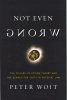
Yet another Templeton-funded endeavor is a new science and religion library at Cambridge University, where, at a cost of $2 million or so, the International Society for Science and Religion will choose 250 books for the library, coming out to about $8000 each. I haven’t yet heard from them, but will be happy to provide a copy of my book at a modest fraction of that price.