Xiaorun Wu Home Page
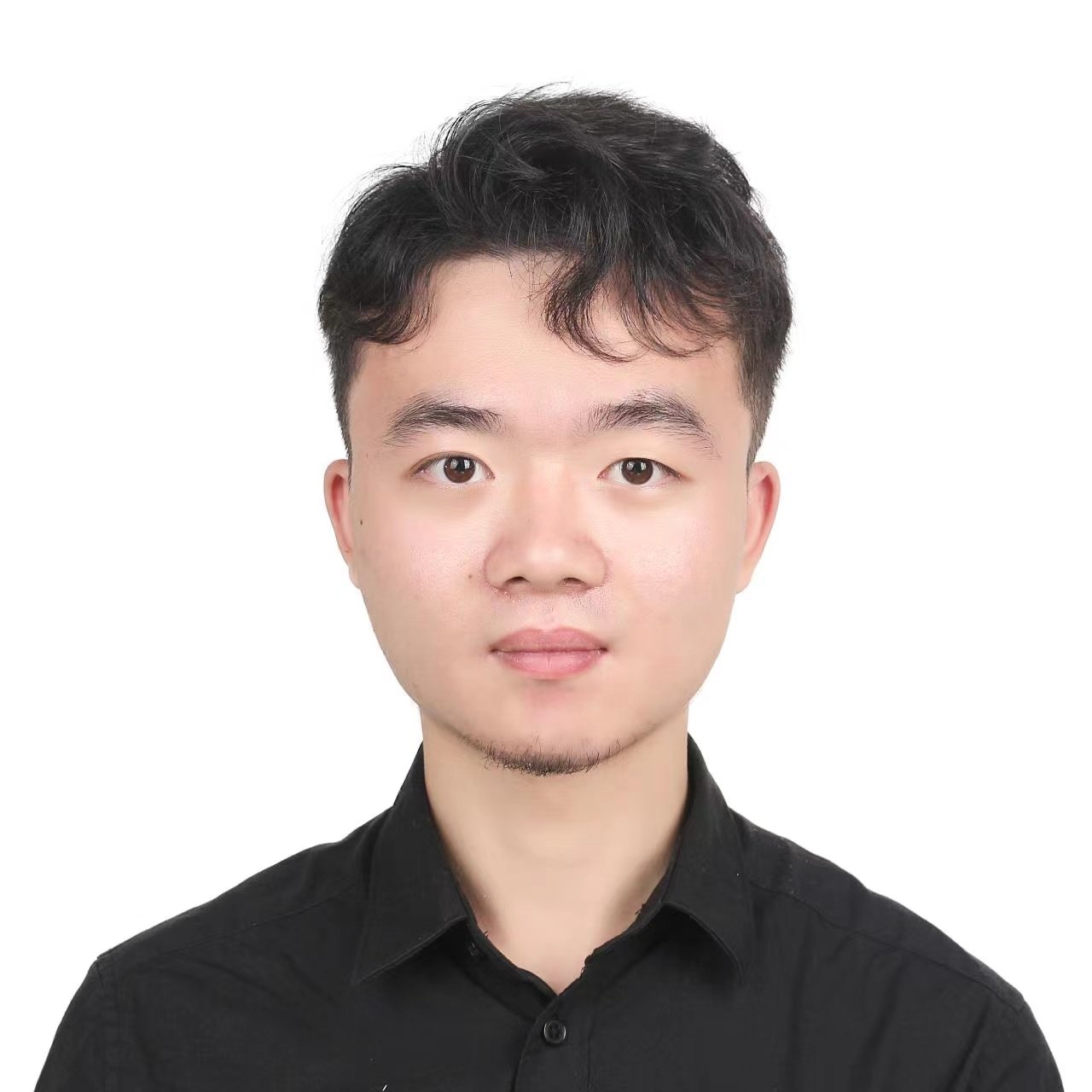
|
Xiaorun Wu
(吴肖润)
Department of Mathematics
Columbia University
Room 509, MC 4406
2990 Broadway
New York, NY 10027
Email: xiaorunw at math dot columbia dot edu
|
About me
I am a fourth-year graduate student at Columbia University, expected to graduate in May 2028. My advisor is Professor Eric Urban. I obtained my undergraduate degree in May 2022 at Princeton University, under the supervision of Professor Shou-Wu Zhang and Professor Christopher Skinner.
Research Interest
Algebraic number theory and arithmetic geometry, especially automorphic forms and congruences, Galois representations and
deformation theory, Iwasawa theory and Hida theory, Hecke algebras and Taylor–Wiles methods, Euler–Kolyvagin–Stark
systems, Selmer groups, and the Bloch–Kato and Birch–Swinnerton–Dyer conjectures. Current work develops explicit, direct
automorphic constructions of rank-one and higher-rank Kolyvagin systems from Hecke–cotangent data and tame-level
variation, without first passing through Euler-system descent. Secondary interests include analytic number theory,
particularly the Gauss circle problem, lattice-point discrepancy, and higher moments.
Education
Ph.D. in Mathematics Columbia University (2022 - Expected 2028).
A.B. in Mathematics Princeton University (2018 - 2022).
Research Publications
My papers can also be found on arXiv here.
Accepted for publication
Higher moments for lattice point discrepancy of convex domains and annuli
2021. Journal of Number Theory, accepted.
arXiv
Journal
Talk by myself
Abstract
Given a domain \(\Omega \subseteq \mathbb R^2\), let \(\mathcal{D}(\Omega,x,R)\) be the number of lattice points from \( \mathbb Z^2\) in \(R\Omega -x\), for \(R \ge 1\) and \(x\in \mathbb T^2\), minus the area of \(R\Omega\): \[\mathcal{D}(\Omega,x,R) = \# \{ (j,k) \in \mathbb{Z}^2 :(j-x_1,k-x_2) \in R\Omega \} - R^2|\Omega|.\] We call \(\int_{\mathbb{T}^2}|\mathcal{D}(\Omega,x,R)|^pdx\) the \(p\)-th moment of the discrepancy function \(\mathcal{D}\). In 2014, Huxley showed that for convex domains with sufficiently smooth boundary, the fourth moment of \(\mathcal{D}\) is bounded by \(\mathcal{O}(R^2\log R)\), and in 2019, Colzani, Gariboldi, and Gigante extended this result to higher dimensions.
In this paper, our contribution is twofold: first, we present a simple direct proof of Huxley's 2014 result; second, we establish new estimates for the \(p\)-th moments of lattice point discrepancy of annuli of radius \(R\), and any fixed thickness \(0< t<1\) for \(p\ge 2\).
Working Manuscripts (Available upon request)
Automorphic Kolyvagin Systems of Elliptic Curves
Work in progress
Abstract
Let \(E/\mathbb Q\) be an elliptic curve, and let \(p\geq5\) be a prime for which the residual Galois representation is surjective. In this paper, we propose a construction of classical Kolyvagin systems from automorphic cohomology classes and periods. Working with the core-rank-zero Kummer Selmer structure, we compare cohomology at core pairs with classical Stark- and Kolyvagin-system lines, thereby transporting integral data from nonclassical level-raising supports to classical auxiliary supports. We show that an automorphic image need only intersect the relevant core line, rather than generate the entire relaxed Selmer group, and give an exact Fitting-ideal formula relating this intersection to cofactor determinants. A class with nonzero residual localization at a relaxed prime can be preserved while additional transverse conditions eliminate the dual Selmer group, yielding a reconstruction criterion at arbitrary residual Selmer dimension. Uniform control of integral content gives a generalized integral system. Applications use existing nonvanishing results for Heegner points and, in the Castella–Hsieh range, diagonal-cycle classes. We also develop the projected Kudla Abel–Jacobi framework and identify the additional compatibility required for all-level geometric realization.
Higher Rank Adjoint Kolyvagin Systems: An Automorphic Construction
Current as of September 2026.
Abstract
Let \(F\) be a totally real field of degree \(d>1\), let \(f\) be a nearly ordinary Hilbert cuspidal eigenform, and put \(T=\operatorname{ad}^{0}(T_f)\). We construct exterior-degree-\(d\) Kolyvagin systems from a degree-\(d\) automorphic zeta determinant and one-prime Taylor–Wiles tangent classes, using techniques of automorphic level raising & lowering. At each squarefree auxiliary index, we evaluate an external tangent determinant in global cohomology and contract it along finite local directions. Exterior biduals provide the integral target over finite coefficient rings, and alternating-contraction identities establish the finite–singular relations uniformly in \(d\). We verify that the resulting Kolyvagin system is non-trivial by showing that the tangent classes exist on a positive-density support primes. We further identify the obstruction to enlarging this support as a Bockstein governed by finite Tate-dual Selmer localization. Separately, we show that under the integral Stark hypotheses and a branch-specific congruence-index comparison, the leading determinant admits a unique primitive full-support Stark extension. Its regulator yields a full-support Kolyvagin system and determines the higher Fitting ideals of the dual ordinary Selmer group under coefficient control. An ordinary-to-finite comparison gives an exact \(p\)-primary rank-zero Bloch–Kato length formula.
A Rank-Two Adjoint Kolyvagin Systems Construction
Current as of August 2026.
Abstract
Let \(F\) be a real quadratic field, let \(f\) be a nearly ordinary Hilbert cuspidal eigenform over \(F\), and put \(T=\operatorname{ad}^{0}(T_f)\). We construct finite-level rank-two Kolyvagin systems from a degree-two automorphic zeta line and independently defined one-prime Taylor–Wiles tangent classes. For each squarefree auxiliary index, we obtain base class from external direct sum of the two base tangent directions and the auxiliary diamond directions. Evaluation in global Galois cohomology, followed by finite-localization contractions in exterior biduals, produces the Kolyvagin components. Then, we construct the auxiliary classes using the injectivity of the chosen-root diamond line in a one-prime Hecke cotangent module. We show that the resulting Kolyvagin system is non-trivial by showing that the required construction works on positive-density set of primes using Poitou–Tate duality and the applicable fixed-weight modularity-lifting theorem.
Adjoint Kolyvagin Systems over \(\mathbb Q\)
Current as of September 2026.
Abstract
Let \(f\) be a \(p\)-ordinary cuspidal eigenform over \(\mathbb Q\), and let \(T=\operatorname{ad}^{0}(T_f)\) be its trace-zero adjoint lattice. We give an automorphic construction of Kolyvagin systems. At fixed coefficient depth, we show that weight and tame diamond directions in ordinary Hecke cotangent modules produce global adjoint cocycles. The signed cofactor of their finite-localization matrix defines a Kolyvagin class. We identify the obstruction to integral tangent specialization as a conormal Bockstein and characterize its vanishing by the localization of the strict dual ordinary Selmer group. This yields a positive-density auxiliary support. We show that under compatible branch and zeta-line identifications, a primitive full-support Kolyvagin system exists. As an application, we show that under the stated coefficient-control and local-comparison hypotheses, this gives an exact ordinary Selmer-index formula, determines higher Fitting ideals, and yields a \(p\)-primary rank-zero Bloch–Kato formula in the critical Tate-dual normalization.
Automorphic Kolyvagin Systems via Eisenstein Congruences
Current as of May 2026.
Abstract
We offer a direct automorphic construction of Kolyvagin systems from ordinary Eisenstein congruences for \(\mathrm{GL}_2/\mathbb Q\) by variation of tame level. We work on compatible, cohomologically admissible, \(p\)-distinguished Eisenstein branches satisfying an explicit new-line regularity condition. Urban’s integral obstruction sequence supplies the coefficient normalization, while the adjugate of the degeneracy Gram matrix defines a cubical transgression to the new cuspidal cone in ordinary completed cohomology. Picard–Lefschetz monodromy realizes the finite–singular comparison, producing a Kolyvagin system without Euler-system norm relations or group-ring derivative operators. An explicit reciprocity law identifies the Coleman image of the leading class with a unit multiple of the Kubota–Leopoldt \(p\)-adic \(L\)-function and establishes nonvanishing. The two base classes agree up to an Iwasawa-algebra unit, and this comparison extends to all squarefree indices after admissible core-rank-one discrete-valuation specialization. We also give a finite-level core-vertex refinement under a Bockstein-survival condition. On the even nontrivial branch, the resulting Selmer bound yields one characteristic-ideal divisibility toward the cyclotomic Iwasawa main conjecture.
The Eighth Moment of the Shifted Disk Discrepancy and a Metaplectic Route to the Gauss Circle Problem
Current as of April 2026.
Abstract
Let \(D_R(x)=\#((R\mathbb D-x)\cap\mathbb Z^2)-\pi R^2\) be the translated disk discrepancy. We prove \(\|D_R\|_{L^8(\mathbb T^2)}\ll_\varepsilon R^{\beta_8+\varepsilon}\), where \(\beta_8=67955/236312+(25808/29539)\theta_*=0.5623263078\ldots\) and \(\theta_*=0.3144831759741\ldots\) is the Li–Yang exponent in the squared-radius variable. This estimate combines a sixth-moment bound from the companion paper with a uniform translated form of the Li–Yang exponential-sum estimate. An argument independent of the companion result, based on oscillatory Bessel half-waves and a planar \(A^4B\)-process, gives the exponent \(0.5624716238\ldots\). Two exact convolution factorizations specific to the eighth moment separate antipodal and caustic configurations and reduce the transverse contribution to fourth moments of confocal-ellipse sums. Curvature estimates and mesoscopic lattice counts yield the radial mean bound \(\int_R^{2R}\|D_r\|_{L^8(\mathbb T^2)}^8\,dr\ll_\varepsilon R^{(19+24\theta_*)/5+\varepsilon}\), together with stronger translation-moment estimates outside quantitatively controlled exceptional sets of radii.
Fixed-Radius Sixth Moments of the Planar Disk Discrepancy: Local Exponential Sums and a Cluster Reduction
Current as of March 2026.
Abstract
Let \(D_R(x)=\#((R\mathbb D-x)\cap\mathbb Z^2)-\pi R^2\) denote the discrepancy of the radius-\(R\) disk translated by \(x\in\mathbb T^2\). We prove the fixed-radius estimate \(\|D_R\|_{L^6(\mathbb T^2)}\ll_\varepsilon R^{47539/88152+\varepsilon}\) by combining planar iterated van der Corput \(A/B\)-process estimates with a frequency-localized Huxley–Watt double-sum bound. The argument retains the oscillatory Bessel coefficients and the dyadic frequency parameter throughout Poisson summation and stationary-phase analysis. We also establish an exact regularized trilinear decomposition of the sixth moment, separating terms controlled by the second and fourth moments from the remaining correlation. In the conic Poisson representation, an elementary congruence count and an explicit derivative determinant control configurations whose six dual indices lie in a cluster. For frequency scale \(P\le R^{5/11}\), clusters of diameter \(O(R^{1/2}P^{3/10})\) contribute \(O(R^3)\), without averaging in the radius.
Honors and Awards
2022- GSAS Fellowship, Columbia University
2018-2022 Gordan-Wu Scholarship, Princeton University
2022 MAA Outstanding Presentation Award, Joint Mathematics Conference
2021 MAA Outstanding Paper Award, Joint Mathematics Conference
2018/2019 Putnam Competition Top 7% Contestants
Seminars Organized / Co-organized
2026 Summer Topics in Number Theory: Higher Hida Theory Seminar
2026 Spring Topics in Number Theory: Hida Theory Seminar
2025 Fall Modular Forms and Eisenstein Congruences Seminar
2025 Spring Langlands Program: Methods of Jacquet–Langlands Seminar
2024 Fall Topics in \(p\)-adic Representation Theory Seminar
2023 Fall Diophantine Geometry Seminar
2023 Spring Automorphic Forms & Representations Seminar
2023 Spring \(p-\)adic Hodge Theory Seminar
2022 Spring Princeton Univergraduate Student Seminar
Selected Talks & Presentations
Speaker, AMS Spring Eastern Sectional Meeting, Boston, MA, 2026. [Program Link]
Speaker, AMS New England Graduate Student Conference, Brown University, Providence, RI, 2026. [Program Link]
Speaker, 51st Annual New York State Regional Graduate Mathematics Conference, Syracuse University, 2026. [Program Link]
Invited Speaker, AMS Contributed Paper Session for Graduate Student & Research Scholars on Algebraic and Arithmetic Geometry and Commutative Algebra, 2022, Seattle, WA [Program Link]
Poster Presenter, Joint Mathematics Conference, AMS-PME Student Poster Session, 2022, Seattle, WA [Program Link]
Invited Speaker, Brown University Symposium for Undergraduates in Mathematical Sciences (SUMS) , 2021, Virtual [Talk]
Invited Speaker, Joint Mathematics Conference, 2021, Virtual [Poster] [Talk]
Invited Speaker, Young Mathematician Conference 2020, Columbus, OH [Slides]
Teaching
Fall 2026: Math GU4044: Representation of Finite Groups, Teaching Assistant
Summer 2026: Math UN1003: College Algebra, Lead Instructor
Spring 2026: Math UN3007: Complex Variables, Teaching Assistant
Fall 2025: Math UN2010: Linear Algebra, Teaching Assistant
Summer 2025: Math UN1003: College Algebra, Lead Instructor
Spring 2025: Math UN1003: College Algebra, Lead Instructor
Fall 2024: Math UN2030: Partial Differential Equations, Teaching Assistant
Fall 2023: Math GU4042: Introduction to Modern Algebra II, Teaching Assistant
Summer 2023: Math S1102: Calculus II, Teaching Assistant
Summer 2023: Math S3028: Partial Differential Equations, Teaching Assistant
Spring 2023: Math UN1102: Calculus II, Teaching Assistant
Fall 2022: Math UN1102: Calculus II, Teaching Assistant
Undergraduate Research Mentorship
Fall 2026: Directed Reading Program : Local fields
Spring 2026: Directed Reading Program : Commutative algebra
Fall 2023: Directed Reading Program : \(p\)-adic numbers
I am a member of Sigma Xi honor society, as well as a member of National Association of Mathematicians .
Last updated on Sep 12, 2026